Shekhawat
Rajput clan: Shekhawat
Vansh Suryavansh.
Descended from: Dhundhar, Amber/Jaipur
Sub-clan of: Kachwaha/Kachawa/Kushwaha
Branches: Bhojraj Ji Ka, Girdhar Ji Ka, Achaldas Ji Ka, Rao Ji Ka, Ladkhani, Bhairo ji Ka, Taknet, Ratnawat, Khejdoliya, Milakpuriya, Tejsi Ka, Jagmalji Ka, Sahasmalji Ka, Lunkaranji Ka, Ugarsenji Ka, Sanwanldasji Ka, Gopalji Ka, Chandapota, Parsuramji Ka, Tajkhani, Hariramji Ka etc.
Ruled in Shekhawati
Princely states: Thikanas of Shekhawati
SHORT HISTORY: Following is a brief historical and genealogical outline of the Shekhawat clan, being one of the 65 branches of the Kachhawa ruling clan of Jaipur, and the most prominent of all the Kachhawas, and are the descendants of great Rajput warrior, Rao Shekhaji (BIOGRAPHY). The early rulers paid allegiance to their overlords, the rulers of Amber, but Rao Shekhaji declared himself independent in 1471 and established a separate principality for his descendants. The Shekhawats ruled over the Shekhawati region for over 500 years and are honoured with the hereditary title of “Tazimi Sirdars”, whom HH the Maharaja of Jaipur receives by rising from his seat. The Shekhawat rulers built more then 50 forts and Palaces during their rule over the Shekhawati region [land of Shekhawat rulers], which was the largest Nizamat [District] within Jaipur State, almost the whole of which is occupied by Shekhawats, Col. J.C. Brooke in his book, Political History of India, wrote that “For the recruitment of Horse-army there is no region in India at par with Shekhawati.” Shekhawat is a very common surname in the Indian military. Many members of the clan have won gallantry awards including the Param Veer Chakra (the highest Indian award for bravery in a time of war), the Mahaveer Chakra, etc.
Sub clans or septs of the Shekhawat clan with their Thikanas:
* Bhojraj Ji Ka
o Udaipurwati [Pentalisa]
+ Jhajhar, founded by Kunwar Purshottamdas, elder son of Raja Todarmal.
+ Gudhagaurji, founded by Thakur Jhunjhar Singh.
+ Chirana, site of a magnificent castle.
+ (Descendants of Thakur Salehdi Singh 1687-1767): Kedh, founded by Kunwar Gopal Singh son of Thakur Jagram Singh.
+ Nangali, founded by Thakur Saledhi Singh.
+ Khirod, founded by Kunwar Amar Singh and Kunwar Ram Singh, sons of Salehdi Singh, they built a castle in 1825 samwat.
+ Moonwari [Mohanwari], founded by Thakur Saledhi Singh.
+ Jakhal
+ Chapoli
+ Gura
+ Paunkh etc.
o Panch Pana - Thakur Shardul Singh, had six sons (see below), who received shares of their fathers estate. One son died young, and his share was divided equally amongst his brothers (these five shares were known as Panch Pana), another son died without issue and his share was given to the surviving brothers.
+ (Descendants of Thakur Zorawar Singh): Chowkari, founded by Thakur Bakhat Singh in 1745, son of Thakur Zorawar Singh of Jhunjhunu. Site of a castle.
+ Malsisar, founded by Thakur Maha Singh in 1745, son of Thakur Zorawar Singh of Jhunjhunu, started the construction of Malsisar Fort in 1762.
+ Mandrella, founded by Thakur Daulat Singh in 1751/1791, third son of Thakur Zorawar Singh of Jhunjhunu. Site of a fort.
+ Chanana, founded by Thakur Ranjit Singh, son of Thakur Daulat Singh, he constructed the Fort of Chanana.
+ Gangiyasar, granted to Thakur Medh Singh. Site of a fort.
+ Tain, founded by Thakur Salim Singh, son of Thakur Zorawar Singh of Jhunjhunu. Site of a fort.
+ Sirohi, founded by Thakur Salim Singh, son of Thakur Zorawar Singh of Jhunjhunu. Site of a fort.
+ Dabdi, founded by Thakur Kirat Singh, son of Thakur Zorawar Singh of Jhunjhunu.
+ (Descendants of Thakur Kishan Singh): Khetri, founded by Thakur Kishan Singh in 1742, second largest Thikana in Jaipur after Sikar. Site of the kaleidoscopic Bhopalgarh Fort, Bagore Fort and a Palace. Thakur Bhopal Singh constructed the Khetri Mahal in 1770.
+ Alsisar I, site of a fort, founded by Thakur Chattar Singh in 1853.
+ Alsisar II, founded by Thakur Ganpat Singh in 1853.
+ Heerwa, founded by Thakur Ramnath Singh. Thakur Pahar Singh constructed the fort of Heerwa in 1763.
+ Sigra, founded by Thakur Mehtab Singh, site of a small Castle.
+ Arooka, site of a fort, the estate was founded by Thakur Duleha Singh in 1796.
+ Badangarh, site of a fort, the estate was founded by Thakur Badan Singh.
+ (Descendants of Thakur Nawal Singh): Nawalgarh, founded by Thakur Nawal Singh in 1737 at the village site of Rohili. Nawalgarh has two forts, Bala Kila Fort, built in 1737, and Fatehgarh or Kachiagarh Fort, as well as Roop Niwas Palace.
+ Mandawa, founded in 1791 by the third and fourth sons of Thakur Narsinghdas of Nawalgarh in 1791. Castle Mandawa was built by Thakur Nawal Singh, in 1755.
+ Mahensar, founded in 1768 by Thakur Nahar Singh, second son of Thakur Nawal Singh of Nawalgarh. Mahensar has a magnificent castle.
+ Parasrampura, founded by Thakur Bhawani Singh, son of Thakur Nahar Singh. Site of a small Castle.
+ Mukundgarh, site of a fort, the estate founded by Thakur Mukand Singh in 1859, son of Thakur Nathu Singh of Nawalgarh.
+ Dorasar, founded by Kunwar Prem Singh.
+ Pacheri, founded by Kunwar Prem Singh.
+ Ismailpur
+ Jakoda
+ Kolinda etc.
+ (Descendants of Thakur Kesari Singh); Dundlod, founded by Thakur Kesari Singh, who constructed Dundlod Fort in 1750. The fort has the majestic Diwan Khana.
+ Bissau, founded in 1746 by Thakur Kesari Singh, site of a fort.
+ Surajgarh, founded in 1778 by Thakur Surajmal.Site of a fort.
* Ugarsen Ji Ka
* Gopal Ji Ka
* Achaldas Ji Ka
o Jahota, granted to Thakur Achaldas, son of Thakur Bhagwan Das.
* Bhairo Ji Ka
* Tejsi Ji KA
* Taknet
* Khejroliya
o Khejroli, granted to Kunwar Bharmal, younger son of Rao Shekha.
* Milakpuriya
o Milakpur, granted to Kunwar Trilok, younger son of Rao Shekha.
* Dundawat
* Girdhar Ji Ka
o Khandela Senior, site of the Bara Pana Fort, the estate was founded by Raja Udai Singh in 1697.
o Khandela Junior, site of Chhota Pana Fort, the estate was founded by Raja Fateh Singh in 1683.
o Danta, founded by Thakur Amar Singh, later Thakur Bhawani Singh, constructed the fort of Danta in 1754; Danta was in Sambhar Nizamat of Jaipur.
o Khood, site of a fort, the estate was founded by Thakur Shyam Singh.
o Surera, site of a Castle.
o Banuda
o Ralawta
o Palsana
o Ramgarh (near Danta), site of a strategic Fort, built by Guman Singh Shekhawat [Ladkhani] in 1733AD.
o Bawari etc.
* Rao Ji Ka
o Sikar, site of a fort and a palace, namely the Madho Niwas Palace, the estate was founded in 1687 by Rao Daulat Singh, son of Rao Jaswant Singh of Kasli.
o Kasli, founded by Rao Tirmal, who was granted the title of Rao and the parganas of Nagore and Kasli (84 villages).
o Shyamgarh
o Sarwari etc.
* Ladkhani
o Khachariawas, site of a fort, the estate was granted to Thakur Lad Singh in 1618. Khachariawas was in Sambhar Nizamat of Jaipur.
o Khatu, founded by Kunwar Kesari Singh, son of Thakur Lad Singh of Khachariawas.
o Lamia, site of a fort, the estate was founded by Kunwar Maya Singh, grand son of Thakur Lad Singh of Khachariawas.
o Dhingpur
o Vajiwas
o Roolana
o Singhasan
o Pachar, site of a fort.
o Bidoli etc.
* Tajkhani
* Hariram Ji Ka
o Mundro
o Awawas
o Lasada, some of these thikanas are also Bhomias.
* Parasram Ji Ka
* Ratnawat
Ancient sites of the Shekhawats:
* Jhunjhunu - was taken over by the Thakur Shardul Singh in 1730 from the Kayamkhani Nawabs. Jhunjhunu has three forts, namely Badalgarh Fort, Jorawargarh Fort, Akhegarh Fort, as well as a Palace, Khetri Mahal.
* Laxmangarh - founded in the early 19th century by Raja Laxman Singh of Sikar. Rao Raja of Sikar, Laxman Singh constructed a beautiful kaleidoscopic fort on the hill in 1862. He also founded a town, naming it after himself, as Laxmangarh in 1864. This town was styled after the Jaipur Town planning system.
* Raghunathgarh - site of two Forts on the hill, built by Rao Raja Devi Singh of Sikar in 1791.
* Devigarh - site of a fort on the hill, built by Rao Raja Devi Singh of Sikar in 1787.
* Amarsar
* Nan
* Ralawata
* Fatehpur - established in 1451 as a capital for Muslim Kayamkhani Nawabs, but was taken by the Shekhawat Rajputs in the 18th century.
* Ramgarh - founded by Rao Raja Devi Singh of Sikar in 1791.
PREDECESSORS:
* Raja UDAYAKARAN of Amber 1367/1389, married and had (with other issue).
o Rao BALOJI (qv)
* Rao BALOJI 1389/1430, third son, received his patrimony of Barwara, married and had issue.
o Rao MOKALJI (qv)
o Rao KHEMRAJ, his descendants were one of the bara Kotri.
o Rao KHARUD, married and had issue.
+ Rao KUMAN, ancestor of the Kumawat clan (nearly extinct in 1823).
* Rao MOKALJI 1430/1445 of Barwara, married and had issue. He died 1445.
o Rao SHEKHAJI (qv)
* Rao SHEKHAJI 1445/1488, born 1433, founder of Amarsar in 1460, married six wives, and had issue. He died 1488.
o Kunwar Durga, ancestor of the Gadh Taknet clan. He died 1488 in Ghatwa battle.
o Kunwar Puran Mal, died sp 1488 in Ghatwa battle.
o Kunwar Ratna, ancestor of the Ratnawat clan.
o Kunwar Abha
o Kunwar Achala
o Kunwar Trilok, he was given Mallikpur jointly with his two older brothers, and their descendants are known as Mallikpuria.
o Kunwar Kumbha
o Kunwar Ridmal
o Kunwar Bharmal, he was given Khejroli jointly with his two older brothers, and their descendants are known as Khejroliya.
o Rao RAIMAL (qv)
* Rao RAIMAL 1488/1537 of Amarsar, married 7 wives, and had issue, 4 sons. He died 1537.
o Rao SUJA SINGH (qv)
o Kunwar Tej Singh
o Kunwar Sahas Mal, granted the jagir of Siwar.
o Kunwar Jagmal
* Rao SUJA SINGH 1537/1548, married and had issue, 5 sons.
o Rao LUNKARAN of Amarsar (qv)
o Rao RAISAL (qv)
o Rao GOPAL SINGH, had descendants at Jharli.
o Kunwar Chanda Singh of Mahanpur.
o Kunwar Bhairon Singh of Bassi.
* Rao LUNKARAN 1548/1584 of Amarsar, which comprised some 360 villages which was overshadowed by the Junior lines some 200 years later, granted a mansab of 2000 sawars by Akbar, appointed Faujdar of Sambhar in 1571, married (amongst others), Rani Hansa Bai, grand-daughter of Raja MALDEO of Marwar, and had issue. He died 1584.
o Rao MANOHAR, founder of Manoharpur later renamed Shahpura.
o Kunwar Natha Singh
o Kunwar Narsingh Das
o Thakur Bhagwan Das of Reengus - Mehroli, married and had issue.
+ Thakur ACHAL DAS, founder of the Achaldasji ke Shekhawat clan, ancestor of the Thakurs of Jahota in Jaipur.
+ Kunwar Jagganath Singh, died in Dhauli battle.
o Kunwar Sanwal Das
o Kunwar Kishan das
o Kunwar Dule Harai
o Kunwar Ishwar Das
o Kunwar Kalyan Das
o Kunwar Chitar Das
* Raja RAISAL Darbari 1584/1614, born about 1538, granted the jagir of Lamiya, granted the title of Raja and a mansab of 1250 sawars later raised to 3000, married (amongst others), 3rdly Rani Mertanji, married 4thly, Rani Hansa Kumari, died 1614, married (a), the daughter of the Raja of Khandela, adding that territory to his own, ancestor of the Raisalot clan, including the Sadhani sub-clan. He died 1614.
o Thakur LAD SINGH of Khachariawas (better known as Lad Khan), ancestor of the Ladkhani sub-clan of the Shekhawat.
o Thakur Virbhan Singh
o Rao Tirmal (by 3rd wife), granted the title of Rao and the parganas of Nagore and Kasli (84 villages), married and had issue.
+ Rao Gangaram of Kasli, married and had issue, the Raos of Sikar. He died at Renwal.
o Rao Bhojraj (by 4th wife) 1621/1640, born 1567, he represented his father, Raja Raisal in the battle of Kangra in 1582; he received the village of Kosambi in 1608 as his jagir, it was later renamed Udaipur, granted a mansab of 800 zat and 400 sawars, later raised to 1000 zat and 500 sawars; in 1596, the year of famine, he started the construction of a tank, namely the “Bhoj Sagar” for the relief of famine sufferers; married and had issue, the “Bhojraj Ji Ka” sub clan. He died about 1640 at Khandela where his cenotaph was built.
+ Raja TODAR MAL, succeded his father as the Raja Sahib of Udaipurwati 1640/1658, a generous and noble person, he served as Finance Minister and Prime Minister, and was considered to be one of the nine Gems of India during Padshah Akbar’s reign. He was one of the closest associates of the Mughal emperor Akbar, who sought his services during the conquest of Bengal in 1576. He also led the military campaign against Chitor in 1568. He was famous for his land revenue settlement known as Zabti or regulation system. He divided the cultivable land into four classes on the basis of the fertility of the soil and frequency of cultivation. Once he gave a unique reception and showed hospitality to Bareth Haridas (the Kavi of Maharana Jagat Singh of Udaipur), after testing his generosity, Bareth remarked - Two Udaipurs are glorious,two givers are unhesitating; one is Rana Jagat Singh and another is Raja Todermal; he married and had issue. He died 1658.
# Kunwar Purshottam Das of Jhajhar in Rajasthan (Photo), married Kunwarani Phool Kanwar Mertani Ji Sahiba of Kuchaman, and had issue, two sons and a daughter.
* Thakur Hari Singh, married but died sp.
* Thakur Prithvi Singh (Photo), married 1stly, Thakurani Biki Ji, married 2ndly, Thakurani Biki Ji, married 3rdly, Thakurani Udawat Ji, and had issue, four sons. He died in the battle of Devli and Heerapura, north of Sambhar.
o Thakur Fateh Singh, [Fateh Singh Ji Ka Pana, Jhajhar], married and had issue.
o Thakur Padam Singh, [Padam Singh Ji Ka Pana, Jhajhar] married and had issue.
o Thakur Sabha Singh, [Pana Malam Singh Sabhasinghot, Jhajhar], married and had issue.
o Thakur Karan Singh, [Karan Singh Ji Ka Pana, Jhajhar], married and had issue, two sons.
+ Thakur Badan Singh, married and had issue.
+ Thakur Devi Singh, married and had issue.
# Thakur Bhairo Singh, he was granted the jagir, later named as “Bhairobas” Raola of Jhajhar; married and had issue.
* Maharani Sukhroopde Kanwar, married Maharaja RATAN SINGH of Ratlam. She committed sati in 1658.
# Kunwar Shyam Singh of Chapoli.
# Kunwar Himmat Singh of Kari.
# Kunwar Bhim Singh of Moondawarra, Rawao and Girawadi.
# Thakur Jhujhar Singh, married and had issue. He died 1687.
* Thakur Jagram Singh, married and had issue.
o Kunwar Kushal Singh of Badao.
o Kunwar Gopal Singh of Udaipur
o Kunwar Sukh Singh of Panchlangi, died 1719.
o Thakur SARDUL SINGH, born 1681, conquered the territory of the kaimkhani Nawabs of Jhunjhunu in 1730, married 1stly, 1698 Thakurani Sahaj Kanwar of Nathasar, married 2ndly, Thakurani Sirey Kanwar of Nathasar, married 3rdly Thakurani Bakhat Kanwar of Poonota, and had issue. He died 17th April 1742.
+ Thakur ZORAWAR SINGH (by 1st wife), born 1700 at Kant, married and had issue. He died 1745.
# Kunwar Bakhat Singh of Chokri and Doomra.
# Kunwar Maha Singh of Malsisar.
# Kunwar Daulat Singh of Mandrella.
# Kunwar Jait Singh, died sp 1752.
# Kunwar Salim Singh of Taien-Sirohi.
# Kunwar Medh Singh of Gangiyasar.
# Kunwar Hathi Singh of Sultanu.
# Kunwar Kirat Singh of Dabri Dheer.
+ Thakur KISHEN SINGH (by 3rd wife), born 1709, ancestor of the families of Khetri, Arooka, Seegra, Alsisar and Balaria.
+ Kunwar Bahadur Singh (by 3rd wife), born 1712, died 1732.
+ Thakur NAWAL SINGH Bahadur (by 3rd wife), born 1715, ancestor of the families of Nawalgarh, Mahensar, Dorasar, Mukundgarh, Narsinghani and Mandawa. He died 24th February 1780.
+ Thakur KESHRI SINGH (by 3rd wife), born 1729, ancestor of the families of Dundlod, Surajgarh and Bissau, 4th and youngest son, died 1768.
+ Thakur Akhey Singh (by 3rd wife), died sp 1750.
+ Rani Guman Kanwar (by 1st wife), born 1699, married Rao CHATTAR SINGH of Indragarh-Kotah.
o Thakur Saledhi Singh of Moonwari and Nangali, born 1687, married and had issue, 13 sons and 3 daughters. He died about 1767.
+ Kunwar Ajit Singh, died 1785.
* Lad Kanwar, married Apji Inder Singh of Indragarh-Kotah.
* Hasta Kanwar
* Shab Kanwar, married Apji Megh Singh of Indragarh-Kotah.
* Janak Kanwar, married Apji Amar Singh of Khatoli-Kotah.
* Sukh Kanwar, married Maharaj Shivnath Singh of Sitamau.
# Kunwar Harnath Singh of Rasulpur.
+ Kunwar Kesari Singh
+ Kunwar Raghunath Singh
o Kunwar Puras Ram of Bae.
o Kunwar Hur Ramji of Mundurri.
o Kunwar Taj Khan, he died sp.
o Raja GIRDHAR SINGH (by 3rd wife), 7th son, granted the jagir of Khandela, by Padshah Jahangir.
o Kunwar Kushal Singh, married and had issue.
+ Ladi Kanwar, married Amar Singh Rathore, became sati 26th July 1644.
The help of Bhanwar Ajit Karan Singh Shekhawat of Jhajhar is gratefully acknowledged, 2007.
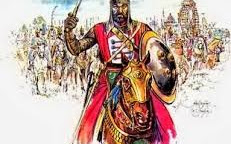
Maharao Shekhaji was born in 1433 (v.s.1490), the son of Rao Mokalji and Rani Nirbanji. Rao Mokal was a chieftain who held the estate of Nan in fief from the ruler of Amber (Jaipur). The story of Shekha’s birth is rather interesting. Mokal and Nirban were much troubled as they had no son for several years. They heard about the miraculous powers of the Sheikh Burhan, a Muslim mendicant. They decided to pay the man a visit. After they received the blessings of the Sheikh, a son was born to the couple. In honour of the mendicant, the couple named their son Shekha. At the age of 12 year he succeded his father in 1445 (v.s.1502). He was granted the title of Maharao by Raja Udharan Ji of Amber. The first notice of his valour was at the age of 16 years, with his sudden attack on Napa (Sankhala Rajput) at Nagarchal, Saiwar, Multhan etc. From 1473 to 1477 (v.s.1530 to 1534), with the help of Panni Pathans, Maharao Shekha conquered Dadri from Nop Singh Jatu and Bhiwani from the Othe Jatu Rajputs, Hansi from Ikhtar Khan and Hissar from Heda Khan Kaimkhani. Thus he extended his territory and become powerfull. Shekha’s reputation and growing power attracted the notice of the Raja of Amber, who was acknowledged as the head-Tikai, and was sent as a tribute, all the colts reared on his land. Shekha refused to send the colts and as a result of it Raja Chandersen of Amber attacked him. They fought several battles and in the last one, in 1471 (v.s.1528), Shekha repulsed Chandersen at the bank of Kokus river, near Amber. A treaty was made between both of them and according to it, the practice of sending colts to Amber was abandoned. After this, they lived peacefully and Shekha become independent and founded a union which was the birth of the Shekhawati federation. In 1449 (v.s.1506), Shekha Ji founded Amarsar (other sources mention that it was founded in 1460 (v.s.1517). In Amarsar Shekha built the tample of Bhagwan Jagdish and in 1477 (v.s.1534), he built the Shikhargarh Fort. Kulraj Gaur was ruling at Ghatwa, and under his command, a tank was being excavated at Jhotari village, and he ordered that any one passing that way should remove a quantity of earth from the tank. A rajput of Kachhawa clan was returning home with his bride, the rajput obeyed the rule and removed the earth, but the Gaurs insisted that his wife should do the same. The rajput did not agree to it and was killed in the defence of his honour. According to his last wish, his widow went to Amarsar and placed a handful of dust before Shekha and told him the fame of the Kachhawas would be tarnished if they did not take revenge upon the Gaurs. Thereupon, in 1478 (v.s.1535), Shekha invaded Ghatwa and the battle took place at the same tank and Kolraj was killed. Shekha took the head of Kolraj pierced on his spear and returned to Amarsar where it was shown to the widow and was hung on the Pol [gate] of his fort. The Gaur Rajputs fought about 12 battles with Shekha. They also recieved help from Sultan Behlol Khan of Delhi. In the last battle, they met near Ghatwa on the “Khontiya” tank and fought fiercely. Rao Ridmal of Maroth wounded Shekha with his arrows and Shekha gave him a blow with his spear. Nawalraj, a son of Kolraj, killed Durga and Puranmal. Shekha tried to save his sons and gave a serve blow with his sword and killed Nawalraj. Rao Ridmal left the battle field. Shekha conquered Ghatwa and the other villages of Gaurs. Raimal with a force of two thousand horsemen arrived to help his father. Shekha was severely wounded and before his end, he nominated Raimal as his successor. Shekha expired peacefully at Ralawata in 1488, on Baisakh Sudi 3 [akha teej], v.s.1545. His cenotaph was built there. Maharao Shekha fought 52 battles in his lifetime. He was the ancestor of the Shekhawat sub-clan.